

By continuing your navigation, you accept the use of cookies to have services and offers tailored to your interests.
To learn more view our Cookie Policy.



30/08/2024
Compulsive hoarding disorder, also known as syllogomania or hoarding disorder, is characterized, according to a reference book published by the American Psychiatric Association (APA), by an individual’s persistent difficulty in discarding or parting with their possessions, regardless of their actual value, due to an intense need to save them and the distress associated with the idea of discarding them. People suffering from this disorder may accumulate all sorts of items, ranging from common household objects to…...

05/06/2024
Even if it is tax-exempt, every syndicate of co-owners must submit an income tax return each year, both at the provincial and federal levels. This return must be filed within six months following the end of the fiscal year. A syndicate of co-owners must therefore complete the Non-Profit Organization Information Return using CO-17.SP form (at the provincial level) and the Corporate Income Tax Return using form T2 (at the federal level). It is important to…...
30/05/2024
A syndicate of co-ownership becomes an employer when it hires an employee under a work contract, whether verbal or written. A work contract exists when an employee performs work for remuneration under the direction or control of an employer (article 2085 of the Civil code of Quebec). This entails new legal responsibilities and obligations for the syndicate of co-ownership (SOC). Failure to comply with these obligations can result in significant legal and financial consequences. To…...
10/03/2024
The Goods and Services Tax (GST) and the Quebec Sales Tax (QST) are collected in Quebec on the sale of most goods and services. The application of the Excise Tax Act (Part IX) and the Act respecting the Québec sales tax in respect of expenses incurred by a syndicate of co-owners and the contributions to common expenses it receives from co-owners is a very complex subject. Before registering for the GST and QST files, a…...
22/08/2023
22 août 2023 - Un devoir fondamental d’assurer l’entretien et la conservation de l’immeuble s’impose aux administrateurs de tout syndicat de copropriété; c’est d’ailleurs là leur mission première. Il en découle l’obligation de pourvoir aux coûts engendrés par ces travaux. Voyons donc quelles sont les principales sources de financement des travaux en copropriété. ...

11/12/2022
Depuis plusieurs années, il a été constaté que le métier de « syndic de copropriété », dénommé au QUÉBEC « gestionnaire de copropriété » n’attirait pas de nouvelles vocations principalement parmi les jeunes. Les jeunes ou les moins jeunes qui choisissent ce secteur d’activités sont bien rares à se destiner au métier d'agent immobilier-syndic. Malgré les efforts des écoles en charge de la formation de base et des fédérations activent dans le secteur, le nombre de syndic inscrit sur le tableau de…...

22/11/2022
Every January or February, the manager, the accountant or the administrator of the co-ownership syndicate must complete, at the request of the co-owners concerned, the form TPZ-1029.MD.5-V for the tax credit for home support services for seniors. Completing this form requires an analysis of the accounting books to use only eligible expenses. This work can take a lot of time, depending on the volume of transactions of the condominium. It is tempting to charge the…...
15/07/2016
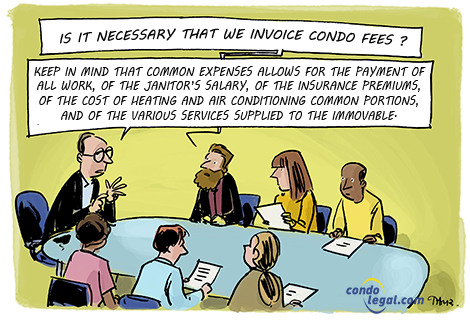
The accounting of the co-ownership is managed by the members of the board of directors or the manager designated by the latter. It is necessary for them to understand the rules of accounting in order to ensure the effective management of the syndicate of co-owners on a daily basis and measure its result in a reliable way. However, not all directors and co-owners are accountants by trade. It is therefore important that they understand the…...
14/11/2022
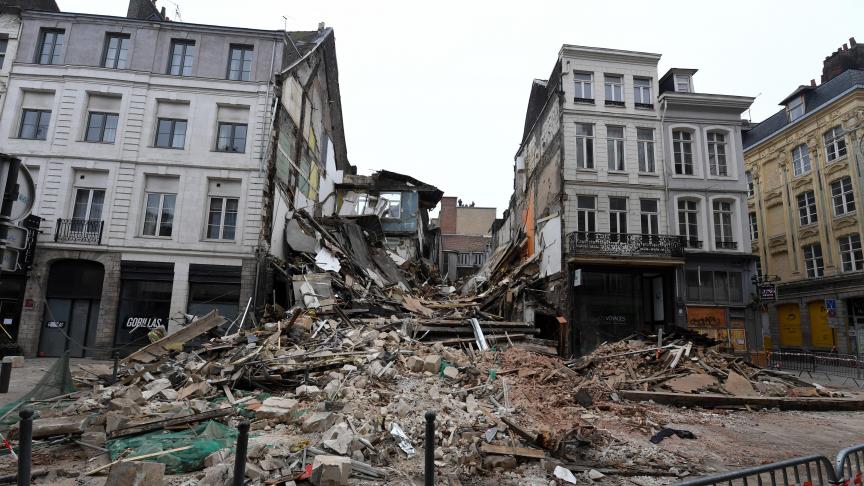
Marseille (Région Provence Côte d’Azur), le 5 novembre 2018 à 9h du matin : L’immeuble en copropriété 65 rue d’Aubagne s’effondre entrainant avec lui la chute de l’immeuble voisin appartement à la Ville. 8 morts sont à déplorer. L’information judiciaire pour « homicides involontaires aggravés et violation d’une obligation de prudence ou de sécurité » a permis de comprendre que l’effondrement a été provoqué par la rupture d’un poteau supportant le plancher du rez-de-chaussée de la copropriété qui…...

14/08/2022
14 août 2022 - Le phénomène du harcèlement psychologique en milieu travail est de plus en plus rapporté et médiatisé. Il se manifeste sous plusieurs formes et ce par des comportements intimidants, vexants et inopportuns. Ce fléau de la société est combattu, partout où il sévit. Nul ne peut se réfugier derrière un quelconque statut juridique, y compris celui de la copropriété. Un syndicat de copropriétaires, en tant qu’employeur, doit prendre les moyens raisonnables pour…...

